Every South Florida homeowner knows the drill: track the storm, grab the water and batteries, board up the windows. But the systems that fail most often during and after a hurricane aren’t the ones people think to check first. A neglected sump pump, an AC condenser that gets flooded, or a generator that hasn’t been started since last season can turn a storm into a much bigger problem than the wind and rain ever were.
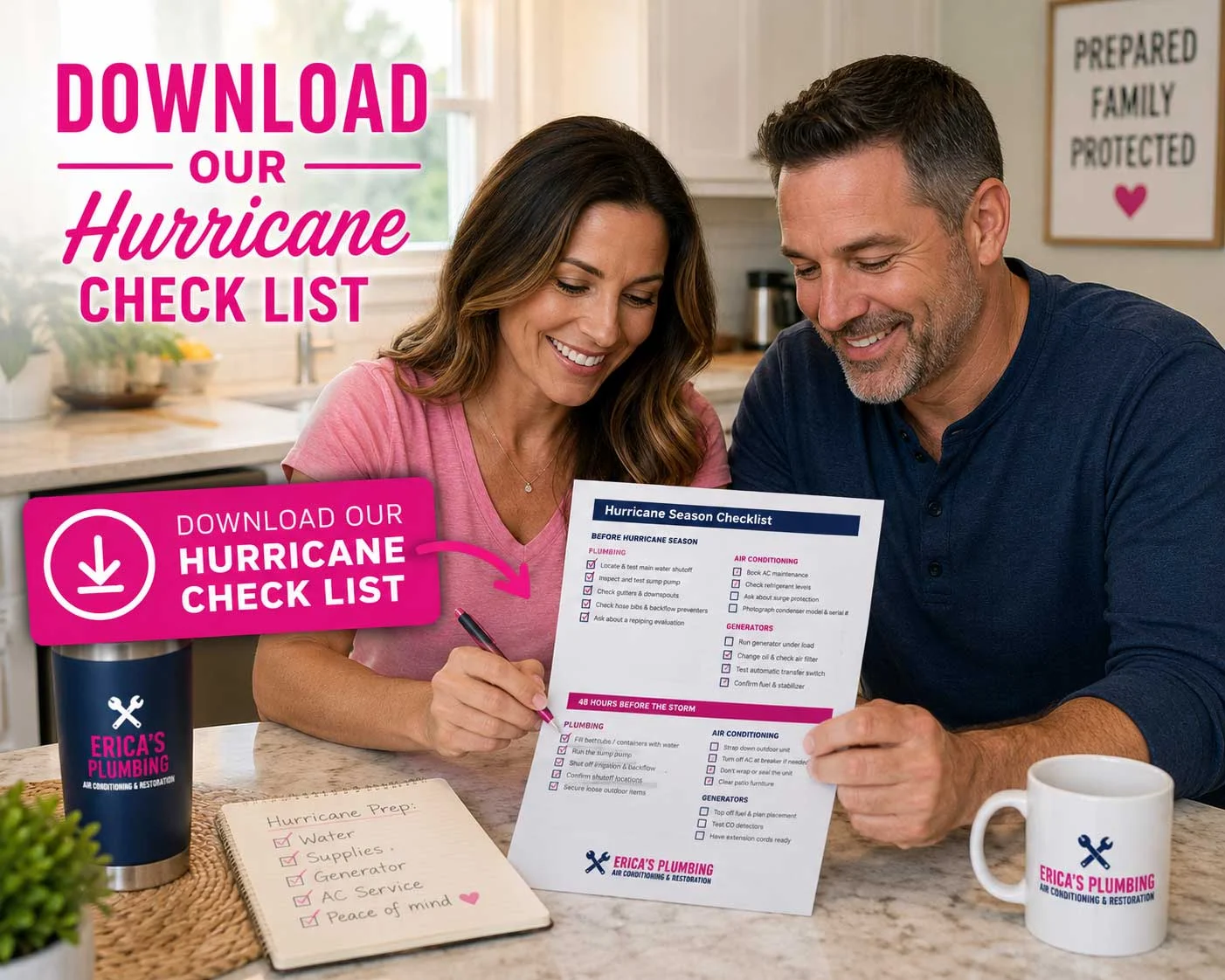
This hurricane check list covers what actually needs your attention before, during, and after hurricane season—broken down by plumbing, air conditioning, and generators, so you can work through it room by room, system by system.
Before Hurricane Season Starts (May – June)
Hurricane season in Florida runs June 1 through November 30. The work you do in the weeks before matters more than anything you do the night before a storm makes landfall. Parts, service appointments, and permits all get harder to book once a storm is in the forecast.
Plumbing: Early-Season Checklist
• Locate and test your main water shutoff valve. If it’s stiff, corroded, or you can’t find it, get it serviced now—not during an active leak.
• Have your sump pump inspected and tested under load. A pump that hasn’t run in months can fail silently until you need it most.
• Install or check a battery backup for your sump pump. Power outages and heavy rain tend to happen at the same time.
• Schedule a leak detection inspection for slab leaks or hidden pipe damage that could worsen under storm pressure and flooding.
• Clear gutters, downspouts, and yard drains of debris so storm water has somewhere to go besides your foundation.
• Check exterior hose bibs, irrigation backflow preventers, and outdoor fixtures for cracks or loose fittings.
• If your home still has polybutylene or aging cast iron pipe, ask about a repiping evaluation before storm season adds extra strain to a system that’s already due for replacement.
Air Conditioning: Early-Season Checklist
• Book AC maintenance in spring, before the summer rush and before storm season backs up service schedules.
• Have refrigerant levels, electrical connections, and the condensate drain line checked and cleared. A clogged drain line is one of the most common causes of indoor water damage during heavy rain.
• Ask your technician about surge protection for your outdoor unit. Power surges from storm-related outages are a leading cause of AC compressor failure.
• Photograph your outdoor condenser unit’s model and serial number information now in case you need it for an insurance claim later.
48 Hours Before the Storm
Once a storm is tracking toward South Florida, the goal shifts from maintenance to protection. This is the window to secure equipment and reduce the chances of storm-related flooding or electrical damage.
Plumbing: 48-Hour Checklist
• Fill bathtubs and large containers with water in case service is interrupted. This water can be used for flushing toilets and cleaning if the water main is affected.
• Run the sump pump manually to confirm it’s cycling properly.
• Turn off outdoor irrigation systems and shut off the backflow preventer if flooding is expected.
• Know where your main water shutoff and gas shutoff are located, and make sure every adult in the household knows too.
• Bring in or secure any loose outdoor plumbing fixtures, hoses, or drain covers that could become storm debris.
Air Conditioning: 48-Hour Checklist
• Secure or strap down the outdoor condenser unit if it isn’t already anchored, especially if it sits low to the ground in a flood-prone area.
• Turn off the AC system at the breaker before the storm hits if flooding around the outdoor unit is likely. Running a unit that’s taking on water can damage the compressor.
• Don’t fully wrap or seal the outdoor unit in plastic. It needs airflow and trapping moisture against the coils can do more harm than good.
• Remove patio furniture, potted plants, and any loose objects near the unit that could become projectiles during high winds.
Generators: 48-Hour Checklist
• Top off fuel for a portable generator and store extra fuel in approved, properly labeled containers away from the house.
• Plan generator placement now. It should be at least 20 feet from windows, doors, and vents. Never operate a generator in a garage, carport, or any enclosed space, even if the door is open.
• Test your carbon monoxide detectors. Generator-related carbon monoxide poisoning is one of the leading causes of storm-related injuries and deaths.
• Have heavy-duty, outdoor-rated extension cords available unless your generator is connected through a properly installed transfer switch.
After the Storm: What to Check First
Once it’s safe to go outside, resist the urge to simply turn everything back on. Taking a few minutes to inspect your home’s major systems can prevent expensive repairs and help catch issues before they lead to mold or further damage.
Plumbing: Post-Storm Checklist
• Check for standing water around your foundation and verify that your sump pump is keeping up if flooding occurred.
• Look under sinks, around toilets, and near the water heater for signs of new leaks.
• If floodwater entered your home, don’t use plumbing fixtures until you’ve confirmed the water supply is safe.
• Watch for slow drains or gurgling toilets over the next several days. These can be signs of a sewer line backup caused by storm debris.
Air Conditioning: Post-Storm Checklist
• Before restoring power, inspect the outdoor condenser for standing water, debris, or visible damage.
• If the unit was submerged or partially flooded, have it professionally inspected before turning it back on. Running a flooded system can create electrical hazards and cause expensive damage.
• Check the condensate drain line for debris that may have washed in during the storm.
Generators: Post-Storm Checklist
• Inspect the generator for signs of water intrusion before restarting it, especially portable units that remained outdoors.
• Continue monitoring your carbon monoxide detectors while running the generator during extended power outages.
• Inspect fuel lines and connections for damage caused by wind-blown debris.
Watch for Mold in the Days After
Florida’s heat and humidity mean mold can begin growing within 24 to 48 hours after any water intrusion. Whether the moisture came from a roof leak, flooded AC equipment, or water entering around doors and windows, dry affected areas as quickly as possible.
Over the next week, inspect drywall, baseboards, and carpeting for musty odors, discoloration, or lingering dampness. If your home doesn’t seem to be drying out properly, it’s worth having a mold remediation professional inspect the property before mold spreads into your HVAC system.
Frequently Asked Questions
How often should I test my sump pump before hurricane season?
Test it at least once at the beginning of hurricane season in early June and again whenever a storm is forecast. Sump pumps that sit unused for long periods are one of the most common points of failure during heavy rain.
Should I turn off my AC before a hurricane?
If flooding around your outdoor unit is likely, turn the system off at the breaker before the storm arrives. Doing so can help prevent serious compressor damage if the unit takes on water.
Is it safe to run a generator in my garage during a storm?
No. Never operate a generator inside a garage, carport, or any enclosed or partially enclosed space—even with the door open. Carbon monoxide can build up quickly and become deadly.
How long after a storm should I wait to check for mold?
Start checking within 24 to 48 hours after any water intrusion. Florida’s heat and humidity allow mold to develop quickly, so the sooner you address damp materials, the better.
What should I do if my AC unit was flooded during a storm?
Do not turn it back on. Have it professionally inspected first. Running a compressor that has taken on water can create electrical hazards and lead to even more costly repairs.
Get Ahead of Hurricane Season
The best time to service your sump pump, air conditioning system, and generator is before a storm appears on the radar—not the night before. Erica’s Plumbing, Air Conditioning & Restoration has proudly served homeowners throughout Broward and Palm Beach counties for more than 17 years, providing 24/7 emergency service when severe weather strikes.
Ready to get your home storm-ready? hurricane check list today and schedule your hurricane season inspection:
https://www.ericasplumbing.com/contact-us/
Or call 561-260-5763 anytime. Emergency service is available 24 hours a day, 7 days a week.
About the Author: Erica Sullivan

Skip the line. Save 15% On Repairs. Stay protected all year. Less than a service call. More than peace of mind.Skip the line. Save 15% On Repairs. Stay protected all year. Less than a service call. More than peace of mind.
Experts You Trust in Broward and Palm Beach County
When you choose us, you will experience the difference of having a reliable and caring home service partner. Let us enhance the comfort and joy in your home – because your family deserves the very best.